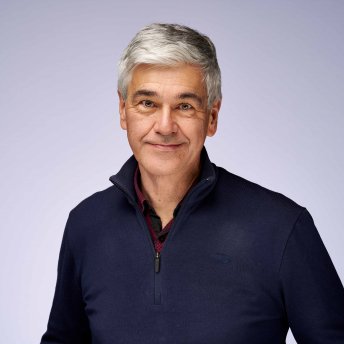
Christopher Owen Miles

Scientist

Presentation

I am a research scientist in organic chemistry with long experience in purification and structure determination of biotoxins from algae and fungi. I routinely use liquid chromatography-mass spectrometry (LC-MS), nuclear magnetic resonance (NMR) spectroscopy, and chemical derivatization for analysis and strucure elucidation. I also develop the chemistry that is necessary for the production of antibodies against small molecules (such as biotoxins), and design and synthesis of reagents for immunoassays of these.

Skills and Expertise:  
Fôrtrygghet, Kjemi og toksikologi, Mattrygghet

Forskningsprosjekter

MyMatch

MyMatch is a EU-financed project focussing on the effects of climatic change on the contamination of food and feed chain with mycotoxins. The climate change has already changed the levels of mycotoxins in the feed and food chain. The occurrence of extreme weather such as drought, heavy rainfalls and flooding is also expected to have an impact on the levels of mycotoxins in crop plants.

Prosjektperiode
2024 - 2028
Område
Fôrtrygghet, Mykologi, Mykotoksiner, Kjemi, Mattrygghet, Toksikologi

ShellFeed

Today, about 92 percent of the raw materials used in Norwegian aquafeeds are currently imported. Shellfish can be a sustainable feed supplement and valuable local marine resource, but are regularly contaminated with algal toxins. The ShellFeed-project aim at providing knowledge about the toxicity of the algal toxins (OA/DTXs and STXs) in salmon after dietary exposure, and potential carry-over of these toxins or their metabolites into fish fillets or by-products.

Prosjektperiode
2023 - 2026
Område
Fôrtrygghet, Mykologi, Mykotoksiner, Kjemi, Mattrygghet, ToksikologiAlgetoksiner, Dyrevelferd, Fiskehelse, Fôrtrygghet, Risikovurdering

ShellFeed

I dag importeres om lag 92 prosent av råvarene som brukes i norsk fiskefôr. Skalldyr kan være et bærekraftig fôrtilskudd og en verdifull lokal marin ressurs, men er regelmessig forurenset med algetoksiner. ShellFeed-prosjektet har som mål å skaffe kunnskap om toksisiteten til algetoksiner (OA/DTX-er og STX-er) i laks etter fôreksponering, og potensiell overføring av disse toksinene eller deres metabolitter til fiskefilet eller biprodukter.

Prosjektperiode
2023 - 2026
Område
Fôrtrygghet, Mykologi, Mykotoksiner, Kjemi, Mattrygghet, ToksikologiAlgetoksiner, Dyrevelferd, Fiskehelse, Fôrtrygghet, RisikovurderingAlgetoksiner, Dyrevelferd, Fiskehelse, Fôrtrygghet, Risikovurdering

ToxANoWa

Algal blooms occur naturally and such algal blooms can be harmful to aquatic life. The ToxANoWa project is a direct result of the toxic algal bloom in Northern Norway in the spring of 2019, which was catastrophic for the aquaculture industry and resulted in the death of around 40,000 tons of salmon. It is unknown why this alga may be toxic to fish, but the project will contribute to new knowledge around this.

Prosjektperiode
2021 - 2025
Område
Algetoksiner

ToxANoWa

Algeoppblomstring forekommer naturlig og slike algeoppblomstringer kan være skadelige for livet i vannet. ToxANoWa-prosjektet er et direkte resultat av den giftige algeoppblomstringen i Nord-Norge våren 2019, som var katastrofal for oppdrettsnæringen og førte til at rundt 40 000 tonn laks døde. Det er ukjent hvorfor denne algen er giftig for fisk, men prosjektet forventes å bidra med ny kunnskap rundt dette.

Prosjektperiode
2021 - 2025
Område
Algetoksiner